Sunday, January 20, 2013

Them Niggas Got Shot: The Disturbing Idolatry of King & Obama


I’m sure I’ll be rhetorically crucified in cyberspace by the American Negro.  I am almost positive this text may have an adverse effect on my personal, and. possibly, professional networks and even my occupation.  But I must do this.  I must write this.  I must continue writing this piece in order for me to rid myself, and my constituency of an internal and explicit hypocrisy.  A few times a year I travel to scholarly/academic conferences and listen to presentations of the numerous nuances of the ills of the “Black American Community” or the “Black Problem in America” or “What Blacks Need to Do Better” and I get disgusted, fidgety, and begin to feel out of place.  Just as out of place as I did when I was in elementary school when I was always the only Black kid in the class, or at recess, and, sometimes, at lunch.  The majority, in my opinion, was the other.  I guess you could say that I had reverse-xenophobia. 

I always feel socially uncomfortable with the gullible or those who revel in media interpretations of an event or an individual.  Dr. Martin Luther King Jr. was a man of principles and a man of flaws. Just like Barrack Hussein Obama.  Except King’s social infidelities are more widely known because of J.Edgar Hoover (i.e. whore mongering, marital infidelities, sexual deviances, if you will—he allegedly patronized prostitutes per Hoover and the late Rev. Ralph Abernathy).  Yet, we all must understand, that Obama, just as Dr. King, is and was human.  I fear that too many of us laud these men’s secular accomplishments and deem the two to be deities in a sense as it pertains to the Black American struggle and pseudo-triumph over U.S. racist institutions (i.e. social, economical, and political). 

  I have been mildly entertained and hugely perturbed by cyber-debates that give analyses as to whether President Obama should be publicly sworn into office on the nation’s reserved federal holiday for Dr. Martin Luther King Jr. and the analogous anecdotes of irony that have inundated Facebook posts and the Twittersphere.  Many believe that it is only fitting that the first Black President of the United States is being sworn in on the King holiday and will be sworn in with a bible which once belonged to Dr. King to take the oath.  The ironic thing to me is that we, as a very informed and knowledgeable audience, are even comparing the two men.  One is a prophet at the least and the other is a politician at best.  One dedicated his adult life to the Black Civil Rights Movement, as well as the Poor People’s Movement and the anti-war effort concerning the United States’ involvement and occupancy of Vietnam, and the other is a politician whom, whether it is in his heart or a mere political agenda to sway voters, has fought for women’s and LGBT rights and is a  warmonger by default (no U.S. politician can be elected Head of State without a plan for “national security” which is political jargon for U.S. protection via war and the possibility of war). 


Regardless of how much symbolism the two men have in American and Black American History, neither one of these men, in my estimation, would have or wants to be deified by the public as a Negro messiah.  Whether we like it or not, considering most Black Americans are Christians, neither King nor Obama are Jesus Christ.  King did not die for our sins and I seriously doubt Obama plans on it either.  But both men do bring a static, and, sometimes, fluid symbolic metaphor of the struggle and triumph of  the American Negro—liberation from physical enslavement, the lynching of Jim Crow, the dismemberment of occupational strongholds, ethnic redlining in real estate, and the desegregation of schools across the country, and Black politicians, and, now, a Black President.  The aforementioned has deconstructed the narrative of these two men, and their symbolic representations of the Black American struggle and experience in America and recomposed it as a myth of sorts.  No one individual or idea of an individual garners as much reverence in the Black community as Jesus, Dr. King, and now, Obama (Growing up, every Black grandmother I knew had a painting of ‘The Last Supper’, a portrait of Jesus and Martin Luther King on their living room or dining room walls).
 
Matthew 24:5 (KJV) states, “For many shall come in my name, saying I am Christ; and I shall deceive many,” which is indicative  of how many Black Americans, particularly Generation X and Baby Boomers, have posited both Dr. King and President Obama—as saviors of the entire race.  Not to say that King was a false prophet or Obama has a malevolent political agenda, but these men should not be lauded as a Christ or a messiah who the Black Americans have been waiting for.  What these men are and represent is the Chocolate Horatio Alger Theory embodied in their rhetoric and the social and political courses of their lives.  Each wanted change.  One for his people.  One for his country.  What’s ironic is that King was Black and Obama is of mixed heritage.  Does that not cover the gambit?   And the ideologies of both men seem to be a way of compensating and being individual freedom fighters for people of all ethnicities that reside in the U.S. of A.  King used social change and the injustice of Blacks in America to affect political change (Civil Rights Act of 1964).  Obama used politics to affect social change (his public support of Same Sex Marriage in the  summer of 2012). 
On this day, January 21, 2013, before comparing ideological beliefs and the social relevance, importance, and impact of these two symbols of the Black existence and contribution to the United States, how about we all just reflect on those invisible, Black backs that paved the way, often times with blood, sacrificed their time and efforts and intellect, and, sometimes, their lives like a Christ-like figure should or would that, if not for them, we wouldn’t even know Martin or Barack.  In Chris Rock's stand-up comedy movie "Bigger and Blacker", he juxtaposed the murders of rappers Tupac Shakur and the Notorious B.I. G./ Biggie Smalls with the killings of Dr. King, Malcolm X, and President John F. Kennedy.  Rock says that King, X, and Kennedy were assassinated, yet, in comparison, as for Tupac and Biggie, "Them niggas got shot."  Maybe we shouldn't elevate the poster children for Black achievement and Black change as deities.  Maybe we should laud those daily grinders and grassroots workers as our sociopolitical heroes--be it your pastor, teacher, local community activist or civil servicemen, or parent(s).  In the end process, those who oppose the totality of human equality and opportunity will always subscribe to the ethnic hierarchical structure of the U.S. that has perpetually posited the Negro as an outsider and holistically inferior.  And if you asked them about King, or Obama, they'd say, "Them niggas got shot."  King literally and Barack metaphorically in that he will always be wounded by and bogged down with the weight of having had been the second coming...of Dr. King.
 
                                                                                          -Gee Joyner


Monday, December 31, 2012

That Damn Django!


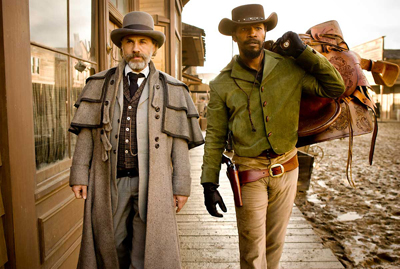
It's hilariously frustrating to me how many public Black scholars and intellectuals and professors of History, Sociology, Literature, and the like, not all, but some, are intent on criticizing Quentin Tarantino and even Jamie Foxx, for their creation/writing/imaginative composition and participation in 'Django Unchained', yet most of the aforementioned Black voices, who are from either America's Generation X or Baby Boomer generations, laud other Black actors and actresses for their involvement and, sometimes, creation of cinematic Black caricatures. (i.e. Alex Haley and Ron O’Neil via 'Superfly').  In my opinion, Tarantino was and is not trying to rewrite Black American History by no means; the man is a writer and director of cinema that attempted, successfully I might add, to tell a love story via the lens of integrating the Hollywood genres of the spaghetti Western and Blaxploitation films.

            As a matter of fact, Tarantino is not only telling a love story, but he is also telling a story of vengeance and proper reparations that posits the Black male as a non-subordinate figure who is a prototypical hero of American cinema—Django is a John Wayne in a sense because he plays by his own rules and is the antithesis of the subservient Negro or subordinate slave of the times in which the movie takes place (1858), described as being “a rambunctious sort” by Leonardo DiCaprio’s character Monsieur Calvin Candy, the slave planter/owner of the Candyland Plantation which, through dialogue, constructs and brings to the forefront the notion that the Black male wasn’t as docile, timid, and fearful of the white patriarchal system. One could even argue that this piece of dialogue even deconstructs the notion of the Antebellum South’s totality of control of the Black male psyche and physical body.  Django does what most slave films do not—show the white slave master and all of the whites that exist in the vacuum of dehumanization getting what they deserve—death, and a violent one at that.

            But Tarantino has done something in American cinema that we haven’t seen in cinematic abundance since the 1970s—he has positioned the Black man as an American Cinematic Hero to audiences of all hues. What is profoundly important is that Tarantino’s Django exists in an era of American History, a troublesome era at that, rather than in an apocalyptic or futuristic era that deems alien beings as the other and objects of xenophobia or in a world where base survival is the most important nuance of life and one’s race is all but obsolete (e.g.  the Black heroes in alien takeover films or the post-apocalypse ‘Book of Eli’).  In a nutshell, ‘Django Unchained’ reintroduces the Black, cinematic hero to audiences that were not privy to the Black Exploitation heroes like Superfly, Shaft, Goldie, or Slaughter.  And because of Tarantino’s bankability, the creation of a Django may very well be the impetus for the reconfiguration of Hollywood’s casting of the Black male.

  Unlike the ‘Blaxploitation’ or ‘Black Exploitation’ films of the 70s, which were mainly viewed by and profited from majority Black audiences, ‘Django Unchained’ is being viewed, celebrated, and financially compensated via the pockets, wallets, and coin-purses of not only Black, but white audiences as well.  Quentin’s Hollywood bankability, directorial respectability, reputation, be it good or bad, and fame affords this film the opportunity to be distributed, accepted, and lauded by audiences and critics of all socioeconomic and ethnic residences.  You could say, ‘Django Unchained’ is the Hollywood’s ‘Roots’, a television network’s production, as it pertains to accessibility and availability of consumption. 

By no means am I writing as some sort of white apologist for the exploitation of Black American life or the Black American experience, but I am writing in defense and support of a film that redirects how Black and non-Black audiences view of a leading Black man or hero.  Django is neither subservient nor in need of Dr. King Schultz’ (Christopher Waltz), the white bounty hunter with whom he works, aid and assistance in saving him from a violent predicament or unwanted quandary (e.g. the Rush Hour franchise).  And he doesn’t die!  Django is all man:  dirty, rugged, tough, physically savvy and skilled, if not supernaturally accurate, in the art of handling a firearm.  Everything the American viewing audience has been conditioned to believe, endorse, and promote from the prototypical white American gun-slinging hero. 

And as far as the argument that is circulating on blogs and the web concerning the politics of gender constructs, can we not posit the dystaxy or "cinematic flashbacks" to Broomhilda (Kerri Washington) and Django's love for her as the "main character"? For example, the entire premise of the movie is one man's longing for the "present" not absent love of his wife. Sure, the male protagonist is the hero, yet the hero is fueled both emotionally and physically by the memory and the longing for his wife.  I believe this revisionist cinematic piece of History disseminated via a cinematic representation is just as profound and potent and important as Tarantino’s ‘Inglorious Basterds’ which is ironic in that I didn’t hear many Jews complaining about that film (please see Dangerfield Newby or John Brown’s raid on Harper’s Ferry to see the similarities between Django and Newby as a historical reference).  If I had an extra arm and hand I’d give this film three thumbs up.  It’s worth the time, money, and intellectual analyses. 
                                                                                                          -Gee Joyner


Sunday, September 23, 2012

The Passion of the (Negroes’) Christ: Why America Will Never Elect Another Black President


       I thought about introducing this piece by copying and pasting one of the numerous, if not exhausted, references by political media pundits  equating Barack Obama to the Messiah (metaphorically speaking of course), or a savior, for the United States of America.  Then, I decided that would be too obvious, too contrived, lame, even corny, at best.  So, I thought about giving a brief 145 word historical analysis of the African in America since 1619 and the nuances of the subordinating, debilitating, and socioeconomic and political stifling vis-a-vis prescribed attributes and derogatory stereotyping of the Black American which has had catastrophic effects on our psyche and self-esteem. But, I decided against that introduction as well.
      By now, my scholars, students, and Intelligentsia are laughing and enjoying the literary trope I’ve used up until this point.  I’m literally introducing the piece with all the introductions I claimed I was against.  I guess you could say  this piece will be a ‘stream of consciousness’ in the vein of philosopher William James, who coined the term in his book ‘The Principles of Philosophy’ (1890).   

 In my opinion, and subjective reality constructed by the ethnic hierarchy that existed in this country long before my father lay with my mother in the late 70s, there is no scholarly path in which I can intellectually walk in order to definitively compose a rhetorical construct that posits President Barack Obama as America’s Christ, yet that’s what the POTUS has become; A savior.  A messiah who’ll cure the ills of the Black ghettos and inspire the Millennial and their offspring and their offspring’s offspring to be great, to challenge the status quo, to break down barriers, to make race, or color, invisible, if not non-existent or a non-factor. So, I will write until I’ve reached my limit—let’s say 1000 words, so that I won’t lose your attention. 
In order to juxtapose Obama’s presidency and his relevance in Black American and American History to that of the historical pertinence of the notorious C.H.R.I.S.T., one must compare the similarities between the two; both were accused of sedition and both men were deemed divine saviors.  Merriam-Webster defines ‘sedition’ as overt conduct, such as speech and organization, that is deemed by the legal authority to tend toward insurrection against the established order. Wasn’t Jesus Christ accused of using subversive rhetoric against the Roman Empire? Hasn’t Obama been accused by far-right wing conservatives, most Republicans, and even some Democrats as being a Socialist? And for one to deem Obama a socialist would suggest, in terms of the ideological understanding of the U.S. government, that the Barack is also a culprit of sedition.  This, in my liberally narrow view of the nuances of the politics of government would be considered a form of sedition because of the president’s alleged socialist views, which, in Karl Marx’s definition, is an in-between time between capitalism and communism and calls for the redistribution of wealth to the masses—which would inadvertently challenge the socioeconomic and political hierarchical structure that inundates American politics, society, and the nation’s History.  How dare the POTUS even think to deconstruct and reconstruct the hierarchical structure that has worked so well for capitalistic America?—(insert laughter and hyperlink satire here)  

  Secondly, both Christ and Obama have been posited throughout History as messiahs who have come to rid the world of sins and restore the morality of humanity while offering salvation and an afterlife in Heaven.  By no means do I believe that Obama is comparable to Christ in the theological context of “washing away” the sins of man and offering man a place in the Heavens, yet in the 21st century American context, the election of a bi-racial and visually aestheticized Negro, Barack Obama was, and in some people’s eyes, particularly Black Americans and liberal whites, is the personification, and a living testimony of what America was always meant to be:  a land void of race and appearance as a societal hindrance, a nation in which anyone from any circumstances can rise to great heights, achieve great feats, and loves all. 
The POTUS was supposed to heal the hood and ‘save’ Blacks from the dastardly ills of inner-city life by the mere winning of the 2008 Presidential Election.  He was supposed to be the laser that was to destroy over four centuries of racism in a land that is now the United States of America.  A messiah for not only Black America, but a messiah for those Americans who tend to say that Blacks that still speak out and speak against racism are ‘race baiters’ and often say the proverbial, “Get over it,”  “Move on,” or “It’s the past, so leave it there.”  He was proof that there are no hard feelings towards Americans of the darker hue.  There couldn’t be, could there?  Non-Blacks and Non-Biracial Americans voted him into office, right?
Briefly let me further delve into another similarity between the Christ and Obama.  Just as Jesus was rejected by the Jews, so has Barack been opposed by his own people à la Isaiah 53:3 (KJV) which states, “He is despised and rejected of men; a man of sorrows, and acquainted with grief: and we hid as it were our faces from him; he was despised, and we esteemed him not.  And have we as the American audience seen not only Blacks, but Americans as a whole reject the POTUS?  Common sense would tell us that the highest political office in the nation would lead Obama to endure the sorrows and hardships of the citizens of this nation.  When his slogan of “hope and change” is mocked by political analysts and laymen alike, do we not believe this causes the man grief?  As odd as it may seem, in my thirty-four years on this planet, I have never seen the POTUS referenced by his first or last name without the esteemed title of ‘President’ preceding it as much as I have in the last 44 months (“..and we esteemed him not.”).  Is it because of his aesthetic being a visual aid for his blackness?  Sure, he is biracial, yet he looks like a Negro.  You be the judge.  I don’t want to be accused of ‘race baiting.’ 
It seems as if the nation, both Black and white, liberal and conservative, Democratic, Republican, or Independent, are telling the nation, the Negro has had his chance.  Why would any other person of color even want to pursue the office of the President?  You will be criticized and poked and prodded daily.  Not that other presidents didn’t endure the same treatment, but it is much more intense when you share the lineage with those who have been stereotyped as the U.S.’ stepchild  via slavery, Jim Crow, and de facto racism.  Hell, even Jesse Jackson, a respected Civil Rights leader and harbinger in Black (presidential) politics was recorded saying he wanted to “cut his nuts off”.  (talk about being rejected by your own people).  High profile Black entertainers, scholars, and members of the nation’s intelligentsia have even come out voicing their uber-criticism of the man’s every move and nuance of his administration’s agenda (e.g. Lupe Fiasco, Cornel West, Boyce Watkins, Tavis Smiley to name a few). 
He’s been attacked by white and Black sociopolitical critics for not attending every Black Caucus or NAACP event or Smiley’s State of the Black Unions, yet don’t we as a people want the man to be the President of all the people, not just some?  I know I do, even though I have been critical of his failure to, in my assessment, adequately address racism and the effects thereof since his time in office, but I’m coming around, folks.  I am trying to become more understanding of what it is to be unbiased and hopefully President Obama’s detractors, on both sides of the sociopolitical aisle, can do the same.  Yes, he’s been a savior, a messiah-of-sorts, particularly for the Black American psyche.  He’s debunked the myth that a Negro could never become the POTUS.  He’s exhibited that a Black man can have fidelity and equality in his marriage.  He’s destroyed the myth of the absentee Black father.  In essence, he can always be upheld as the Black exception to ‘the rule.’ 
  With the aforementioned being said, I doubt the nation will ever elect another Black President, simply because no other Black American would willingly endure what Obama has endured in nearly four years, and the mere electing of a Negroidian American only catapults the issue of race in America to the forefront of the American psyche, and I do not believe America can deal with the issue head on again.  Well, maybe for “four more years.”  See you all in November when the POTUS’ national popularity will be resurrected if only for one night.   Peace to the Righteous. 
 
                                                                                       - Gee Joyner


Sunday, August 19, 2012

Bitches Ain’t Shit But Hoes and Tricks: Fear of the Black Female Voice in Hip Hop and How Dream Hampton May Have Single-Handedly Emasculated the Black Rapper


     Rumors and truths are always revealed by those that are ‘in the know’ or have ‘private’ access to others.  Journalists, writers, and reporters or biographers are an artist’s worst nightmare. Particularly if that alleged artist may be a plagiarist-of-sorts.  One Tweet, said with so much obviousness that Samson-after-the-fall could see, has basically obliterated the authenticity of not only one Nasir ‘Nas’ Jones, but also the validity of talent and creativity in the entire realm of Rap/Hip Hop music.  Will we begin to question all of the greats or self-proclaimed greatest rappers of all time?  Via @dreamhampton, the social media audience was privy to the following post:  Dream Hampton

“I think Jay writes what he believes. Nas' "Nigger" album was largely written by Stic of dead prez and Jay Electronica @JusAire...”  
     This one tweet may have single-handedly blown the lid of authenticity off of Hip Hop/Rap music as a whole. I will not attempt to deconstruct the misognistic and gender hierarchical structure that has existed in Hip Hop, which mirrors and mimicks American society, since its inception in the late 70s and burgeoning presence in popular culture in the 80s, but I will try to defend not only Dream Hampton as a writer, author, journalist, and Hip Hop historian, but women as well who do not fear public criticism in speaking freely about social, or in this case entertainment, issues.    
    
     The potency of this tweet really struck a chord in the Hip Hop community because the one rudimentary element, atleast from a fan’s perspective, of the genre of music is that the lyricist is the verbal and written author of either their verses or their songs and for one to allege that Nas, who is considered by the consensus to be one of the all-time greats in the Rap game, had a ghostwriter to pen his album ‘Untitled/Nigger’ is mind-boggling to Rap aficionados, if not blasphemous.  How could this great poet allow another great poet to do his work for him.  It’s like the valedictorian cheating on a final exam.  Why would they need to do that?  They are already talented and respected and have cemented their place in History.
     Aside from Dream Hampton’s accusation that Nas subcontracted Stic Man of Dead Prez and Jay Electronica to write the majority of the lyrics on his ‘Untitled’ album, to which both Stic Man and Jay Electronica have publicly denied to Vibe Magazine, the more problematic circumstance is the Hip Hop community’s backlash aimed at her for this assertion.  I am not sure whether it is because she may be throwing salt in the game by causing those who use ghostwriters to now avoid that ‘artistic’ option, which in essence would cause many a ghostwriter’s plate to be a little more empty or because Hampton, a woman of color, chose to speak out.  It’s situational irony at its best:  A woman, who has been around Hip Hop’s greatest artists and minds and has been the auditory recipient of a plethora of dehumanizing and objectifying lyrics aimed at females, decided to pull Nas’ card.  I would say that is feminine empowerment to say the least. 
     Would fans of Hip Hop and Nas be as offended and blatantly disrespectful if Dream was a Black man?  Would anyone even be talking about this allegation as much?  Would Jus Blaze had stated that Hampton needed to be “bled out” as she claims he stated in an open forum to if she had been a male?  Particularly a male who could have not only verbally defended themselves or physically and, more than likely, violently retaliated against that threat.  Probably not. 
Rap music, its artists, and its audience has been subjugated to the ideological dominance of the Black male since the music’s inception, and the fact that a female had the proverbial balls to out Nas’ possible artistic plagiarism in an artform that is predicated upon authenticity and the backlash from male artists, fans, and music producers reiterates Snoop Doggy Dogg’s old adage from his ‘Doggstyle’ album that “Bitches ain’t shit but hoes and tricks.”  Maybe Snoop meant that women should not be trusted and will do anything to one-up a man and bring a tragic demise to the male species similar to a whore on the 'hoe stroll' that will rob a John and tell the police that he assaulted her,. 
     But what was wrong with what Hampton tweeted, if it was a truth?  Was she not being authentic in exposing Nas' lack of artistic effort on the 'Untilteled' album?  Why is Dream being villified by Hip Hop?  I guess she's a bitch or a 'hoe' or a trick because she told the truth on a man--even if she was doing her job as a journalist or an insider and a social commentator.   Former U.S. Congresswoman Shirley Chisholm once stated, "The emotional, sexual, and psychological stereotyping of females begins when the doctor says, "It's a girl."  Well, I say to Dream, "You go, girl." (in my Martin Lawrence voice)  You have succeeded in turning Hip Hop on its head and you didn't have to physically and verbally sex yourself up like a Lil' Kim or a Foxxy Brown or a Nicki Minaj to do it either.  Your mere tweet of less than fifty words is more potent and impactful than the exhausted Rap beef.  It seems like those males in Hip Hop who are for some reason mad at Hampton for 'lying' may be the bitches, hoes, and tricks that Snoop Lion referenced almost twenty years ago.
                                                                                                      -Gee Joyner


Saturday, August 4, 2012

Black Hair & The Single Black Mom: America's Fascination with Gabby Douglas


     I don’t know whether or not to celebrate the Olympic triumph of Gabby Douglas or malign the African American community and American media for lauding her as a ‘Black Exception’.  On July 31, 2012, Gabby and her U.S. teammates won the team all-around gold medal and two days later, she won the individual all-around gold medal making her the first African-American woman, and female of color, to win the event in the history of the Olympic Games. 

     Sure this feat is outstanding for any woman, no matter her race, to accomplish, but much of the media fawning has come due to the upbringing of young Gabby being raised by the proverbial single Black mother, as well as social network jabs on Twitter and Facebook aimed at the styling, if not the texture, of Gabby’s hair.  But, the issue here is much more than low brow ridiculing of a young, Black teen’s hair or the heroism connoted with the matriarchal perception of the strong and devoted Black woman.  It is Black America, and America, deeming what is acceptable in a Negro’s public appearance via hair, and the ‘After School Special’ commercialization of the sacrifices of the single Black mother, though foolish as it may be, and the paramount focus Black Americans put on this particular circumstance.
     Ironically, when Black Americans, particularly athletes, attempt to assimilate and infiltrate American popular culture they must ‘look’ the part, at least with their kempt if not ‘good’ hair, and their origins should be, and are oft times most preferably by the media and the consumers and patronizers thereof, from a ‘broken-home’ ( one’s father must be estranged, neglectful, absentee, or unidentified ) in order to substantiate or validate the Horatio Alger story that has, for almost a century, been America’s calling card and utopian-like ideological insurance policy that implies that ‘anyone’ can make it in the U.S.A, home of the free, land of the brave. 

     So, when Gabby Douglas, daughter of an unwed mother of four, wins Olympic gold, and she happens to be of African descent, popularly referred to as ‘Black’ since the mid 20th century, she must align with the sociocultural attributions that one in her position must possess:  Single mother? Check. Stereotypically athletic?   Check. Recognizably Negro?  Check.  Kempt hair? Not so sure.  Yes, the Twittersphere and Facebookland, or at least the Black residents thereof, had differing opinions on the presentability of Gabby Douglas.  I believe the answer lingers somewhere between ¾ of ‘yes’.  Sure, she’s Black, and is the product of the proverbial single-parent home and maintains elite athletic abilities, yet whether or not her hair is kempt or ‘good’ is up for debate, particularly amongst the millions of pairs of eyes of the Black critics. 


But the irony of Gabby’s media-constructed story of the against-all-odds achievement Black athlete is that she isn’t ‘really’ a product of a single-parent home.  For all practical purposes, young Gabby is a product of two loving and sacrificing parents who happen to not be in a marriage or relationship or reside in the same home. But for the media to construct the young Olympian’s biography as if her mother’s sacrifices, both financially, emotionally, and physically (she allowed Gabby to move from Virginia to Des Moines, Iowa to train under renowned gymnastics coach Liang Chow), are the impetus for young Gabby's success is a tool of disempowerement that further castigates the Black American family and the individuals thereof as dysfunctional and scarred. This is the part of the story that the media supresses:  Her father, Timothy Douglas, who has only been briefly mentioned in newspaper articles, blogs, and visual news outlets, is a member of the U.S. armed forces and is currently serving a tour of duty in Afghanistan, yet he did find the time and the funds to attend her gold medal performance this past Thursday.  This act doesn’t reek of an absentee father or paint the picture of a man who is inactive in his daughter’s life.  Timothy may not be in the Virginia home with Gabby and her siblings and Natalie, but I imagine he visits, calls, and pays child support in order for his seed to be properly nurtured and eventually blossom into a successful adult. 

I hope the viewing and reading audience uses the gift of discernment to deconstruct the narrative that has been parlayed to us via the national media pertaining the Gabrielle ‘Gabby’ Douglas.  I especially hope, Black Americans, don’t buy into the stereotypical mythology of the Black athlete rising out of the gutter to achieve tremendous success through talent and a ‘strong,’ ‘independent’ Black woman as her ‘only’ guide in life.  Numerous fathers, Black particularly, who maintain their duties and responsibilities of fatherhood should be ashamed at the way the media is seemingly deleting Mr. Timothy Douglas from his daughter’s Olympic victory and athletic triumph.  Though her father is deployed, I am almost positive the U.S. military will allow and the media can finagle some form of accessibility as a means for this man to garner the same recognition that her mother is receiving.  Gabby was not conceived in a sole effort by her mother and her mother should neither receive the sole authorship nor copyright to the narrative of American success which is Gabby.
                                                                                   Gee Joyner


Sunday, July 15, 2012

'Good' or 'Bad' Hair--See if I Care: The Dilemma of Hair Grade, Length, and Style in the African American Community


Within the African American community, being perceived as having ‘good hair’ has served as the ultimate compliment in African-American cultural dialogue, perception, and acceptance for decades now.  Some would even assert that this has been a divisive tool of distinctiveness that has plagued the African immigrant, via the North Atlantic Slave Trade, since their arrival in Jamestown, Virginia in 1619.    The ‘good’ or ‘nappy’ hair debate, an hierarchy within a larger social hierarchy, has had a negative impact on the culture of African Americans.   Not only has the complexion of a black American’s skin caused dissension amongst people of similar ethnic backgrounds as well as offering privilege and ridicule, but it has also constructed a psyche of self-worthlessness and inadequacy that is counterproductive to the enrichment of a race’s heritage. 
           The aforementioned hierarchical structure, specific to African-Americans, mentioned should be addressed because of the psychological effects, as well as social, and political—which is maybe the most important nuance of the American hierarchical structure because of its overwhelming influence on the ‘hierarchy’ as a whole, because it is the major problems that persists that continues to damage the Black American’s psyche when pertaining to self-worth and societal acceptance. It is difficult to separate one’s perceived ‘grade’ of hair from their  complexion in that both of these physical attributes are so permeated into the African-American’s psyche when pertaining to interpersonal relationships, both internal—as in friendship, fraternal inclusion, and even romantic endeavors and external(i.e. perception of and critiquing of beauty). So, in assessing the political differentiation and acceptance that coincides with the involvement of African-Americans within the United States’ political landscape, the text will often reference an African-Americans’ skin hue as an aside to Black Americans’ hairstyles and hair grades and the politics thereof, and the social commentary and symbolism that is associated with those hairstyles.

            When first critiquing the relevance of hair in the African American political landscape, one must first acknowledge the construction and connotation of the hierarchy of hair within Black America.  Because the body is objectified in mass media, and appearance resides at the top of the American social hierarchy, assimilation and acceptance can only be achieved through the identification with the dominant majority—white America.  With the aforementioned stated, it is important to state that there is no more powerful exhibition of assimilation than to have physical traits of the controlling sociopolitical class.  To identify with white America, the African American is unable to totally integrate, without being victim of xenophobic attitudes, because of the noticeably darker complexion of Blacks, as well as facial characteristics (i.e. lips, nose, and hair texture), but if one’s hair maintains more similarities to the hair of a European American and dissimilarities with individuals of African descent, they can achieve a level of social mobility that affords them opportunities of socioeconomic and political advancement that is not achievable or as easily accessible to the more African-looking black American.

            For so long in America, the more Eurocentric looks and African-American maintained, the more acceptable they were in mainstream America.  From the historic “house nigger” to the light- skinned Dorothy Dandridges and Lena Hornes, Black Americans with ‘good hair’ (i.e. straight, curly, or wavy),  the goal of many African Americans has been to present these type of Blacks to America as a representation of our best and brightest.  That particular looking African American (Thurgood Marshall, Langston Hughes, W.E.B. DuBois) offered white America a visual aid of assimilation, a voyeuristic display as to what, not only Black people could be as far as equality in specified/individual talent and intelligence, and physical characteristics of similarity that resembled that of the dominant majority.  To understand the significance of black hair in America is to understand the juxtapositioning that exists between white and Black Americans in a society in which the dominant culture, particularly the appearance of the dominant culture, is so permeated in the psyches of the subordinate, or minority, class of people that reside in the U.S.A.  It is a necessity for the Black American, particularly in the political realm, to be as close to ‘white’ as he or she can get, be it ideologically or physically.  To be the antithesis of the aforementioned can cause difficulties and even be detrimental in social relevance and participation in the sociopolitical arena.

                        Africanism is the vehicle by which the American self knows itself as

                        not enslaved, but free; not repulsive, but desirable, not helpless, but

                        licensed and powerful; not history-less, but historical; not damned, but

                        innocent; not a blind accident of evolution, but a progressive fulfillment

                        of destiny (‘Playing in the Dark’, Toni Morrison).

If one can look the part of an American, then maybe they can adequately play the role of an American.  To look too African, can summon the memory of the stereotype of the shiftless Negro who cannot exist in an intelligently civilized society.  In essence, the more one maintains similarities to their European counterparts, the more worthy, at least physically, they are to be afforded the opportunity of societal, financial, occupational, and political assimilation. 

            It seems that it would be difficult for an African American to be taken seriously by white constituents and voters if they maintain the prototypical physical characteristics of African Americans (i.e. ‘kinky’ hair, wide noses, thick lips, and dark-skin), yet, in the modern political era, those characteristics are what most of the prominent Black politicians possess. If we look at the most notable Black political figure in America today, President Barack Obama, we notice that for all practical purposes he visually looks like a Black man.  Though he is half Black and half white, Obama’s hair is of an average grade; not nappy or ‘bad’ but also not exceptionally ‘good’.  Though he is a product of miscegenation, he does not exhibit any noticeable European physical traits aside from his lighter skin complexion.  The mere fact that he resembles any normal Black American male in America may make him more palpable in the political arena than if he had a head full of curly or wavy hair or, on the contrary, dreadlocks, braids, perm like Civil Rights activist Reverend Al Sharpton or the infamously powerful Afro.  President Obama’s ability to represent the positivity of Blackness in America (i.e. intelligence, education, articulation, family-oriented) caused whites and Blacks alike to accept the visual representation of Obama because he seemed to “descriptively represent their demographic characteristics” (Morrison 221).  Because of Obama’s visual, he neither alienated whites nor created internal envy amongst Black Americans because of his mixed heritage.  For the most part, the voting public did not put much stock in his ethnic background because not only did Obama not bring it up often, but he did not look the part of a mixed-race individual.
          Throughout U.S. History, most of the prominent Black American sociopolitical figures have had ‘nappy’ hair, for lack of a better term.  From Marcus Garvey to Martin Luther King, many of the nation’s Black leaders have kept their hair natural, not relying on chemicals to straighten, curl, or relax their hair as to make it look more European.  This is peculiar in the sense that it is an unsaid truth that most African Americans prefer their hair, or the hair of other Blacks, to be ‘good’ or at least manageable.  The hierarchy that exists because of hair texture in the Black American community is obvious and consistently referenced whether in beauty or barber shops and is the major descriptor when describing someone other than what their skin complexion may be.  The irony of the Black leader wearing his or her hair natural is a lingering conundrum that neither I nor the sociological experts can explain.  Interestingly enough, the mere existence of the Black political figures wearing their hair natural may be a form of resistance to the totality of assimilation in this country.  Of course there are Black politicians who have what African Americans describe as ‘good’ hair (i.e. Jesse Jackson, former Virginia governor Douglas Wilder, former mayor of New York City David Dinkins), but many that are on the national stage have darker skin and kinky hair like the prototypical Black American.

            In fact, it is more beneficial for an African American politician or social/civic leader to be of a darker skin complexion and have kinkier hair because of the acceptance factor.  Though it has been mentioned in this text that many Blacks want ‘good’ hair or lighter skin so that they can more closely identify with the dominant white culture, it is also noteworthy to mention that being a Black public figure who resembles the prototypical Black American is a positive in garnering votes and respect from the Black community because, ironically, though Blacks may want to look European, they also trust the Blacks who ‘look’ Black.  For instance, light skin with good hair often leads Blacks to believe that the person who possesses these characteristics is either the offspring of a mixed relationship or there is white ancestry in their bloodline—even though most African Americans have European blood in their bloodline, even Native American for that matter, and therefore may not be as trustworthy as the dark-skinned, nappy-haired Negro running for or holding office.   Considering most Black politicians are Democrats and serve in districts, cities, or states with a majority Black voting base, it is almost a necessity that the politician not only look Black, but they must look as Black as the majority of their voters.  It is not as if their voting base will all be of a lighter skin hue and have ‘good’ hair, so it would benefit them to identify with those with ‘nappy’ roots and chocolate skin.
             By physically identifying with the political base of the Black community, wearing one’s hair natural, or having what is to be considered ‘nappy’ hair or not ‘good’ hair is a tool of empowerment for the Black sociopolitical figure in that by having ‘bad’ hair, the politician is reinforcing his or her ethnicity and bringing pride to the Black American and endorsing an afrocentric-look-of-sorts in hopes of forcing the dominant white American culture to accept the Black American for who he is and what he looks like.  Historically, kinky haired Negro, often times of a darker hue, was publicly denigrated for his physical attributes by both Black and white Americans, particularly for the texture of his hair-- all of which was the antithesis of the white American. Yet, in the 70s and 80s, the 'bad' hair was accepted, or atleast presumably so, in the Black community, but most Negroes still revered and reveled at the 'good' hair on a Negro's head as if it was a genetic and sociological anomaly.  So, is it the hair that makes the Negro 'good' or 'bad' in the American perception and psyche of the American public?  I am not sure, but the billion dollar industry that is Black Hair Care in the U.S. would beg to differ, wouldn't it?
                  
                                                                                                -Gee Joyner


Tuesday, July 3, 2012

I Am Hip Hop: Rap Music's Peculiar Impact on Society


First of all, I want the reader(s) to know that ‘I am Hip-Hop.’  I have been a fan of Rap music and the culture since I became infatuated with L.L. Cool J’s “I’m Bad” back in the fourth grade.  Sure, I had heard Rap music before—Kurtis Blow, Run-DMC, and others, yet Cool J’s “I’m Bad” served as the narrative to my life and the soundtrack to my ‘Black Cool’ at a time in my life when I desperately needed it.  The song’s lyrics hypnotized me because of the speaker’s braggadocio and bravado that inundated every line within the bars that composed maybe his best masterpiece to date.  I even called myself “L.L. Cool G” to my elementary peers who had only had vague and minimal brushes with Rap/Hip Hop.  This was 1987-88.  I was a fourth grader at a 95% white middle school and my neighborhood was all white, except for my family.  Yes, Rap music connected me with my race to an extent. 

Now, my father had instilled the sticktuitiveness and pride in myself and my sisters as it pertained to the Black American struggle in the United States, but he and my mother were Civil Rights babies, and I was of a newer and different generation of Black Americans; Generation X and, for the most part, Hip Hop heads. Yes, I understood, respected, and revered the previous generation of African American’s who paved the social, political, and economical way for my peers, but I felt different.  Just as many of my Negroidian peers did.  We had something else to say and nothing to prove or validate to the American ethno-social hierarchical structure.  I was, and, ‘we’ were, Hip Hop.

It can be difficult growing up around people that do not look like you nor have the same ethno-specific and nationalized, if not internationalized, experiences and perception as you, particularly when you have no foundation.  My sisters were lucky enough to be raised in an all-Black neighborhood until their teens, yet I moved to the predominately white suburb of Germantown, Tennessee, outside of Memphis, at the age of three, so I never really had physical roots, though I did have the psychological and ideological ones, in the Black community.

As I grew older, I used Rap music as a conduit to relieve my stress of dealing with social and academic prejudices that ran deep within the schools that I attended, and the music served as a cathartic vessel for me.  I excelled in English, particularly the literary aspect of the discipline and realized that the music that I so much enjoyed was better than anything I was forced to read for my classes and the summer reading lists I received at the end of every school year.  Steinbeck had nothing on Poor Righteous Teachers or KRS-One or Ice Cube or my local Rap heroes (e.g. Playa Fly, Gangsta Blac, Skinny Pimp, or Alkapone).  I began to see Rap as an art form; poetry put to music.  In most cases, I analyzed the bars to a song just as intricately as if they were novellas or novels.  The same literary devices I used to dissect a ‘Literary’ masterpiece were the same techniques I used to analyze my favorite Rap songs.  They were much more than songs to me.  They were stories.  And from the moment I heard Rap, I knew I wanted to tell stories like my favorite artists did— stories of hurt, pain, anguish, triumph, humor, and all kinds of irony.  I would just do it without rhyming and a dope ass track. 

 My parents were neither fans of the Rap genre of music nor the Hip Hop culture, so I never even thought to become an M.C.  Though my first cousins were musicians (pianists, trumpeters), I never wanted to become a producer of beats, I always loved the lyrics and the redefining of the English lexicon in which rappers obliterated and reconstructed. 

I was a lover of ‘words’, and since my parents always stressed the importance of formal education, I chose to delve into English Literature and attempt to make my mark there.  I eventually earned a Bachelor’s degree in English, a Masters degree in English Literature, and received a certification in African American Literature as well as logging numerous hours in Doctoral work towards a PhD in English Literature.  Wrote a book; a collection of short stories entitled “Kim; The Story of John” and have published scholarly works in Black Magnolias and presented and lectured on literary criticisms at several national conferences in the past few years—always staying true to my Hip Hop origins; cadence, intelligence, extratextual, subtextual, inter and intratextual references, as well as ‘keeping it real’ (delineate that for yourselves.  Rap fans will know what I mean.  It is extremely difficult for those outside of Hip Hop or even ‘Black’ culture to create a definitive definition to what ‘real’ is).

Ironically, Rap music, which my parents, like most Baby Booming Blacks, proclaimed a fad and deemed a bunch of gibberish, foolishness, and mumbo jumbo, has morphed from a party and neighborhood block soundtrack to a celebratory and poetically cathartic tool of empowerment for Generation X and Millenials as well as a public and private conundrum as it pertains to the image and perception that Black Americans receive throughout the U.S. and the world.  It is now one of the prominent and hottest areas of study and discipline in the realm of academia via the research of national scholars such as Michael Eric Dyson, Boyce Watkins, Mark AnthonyNeal, and Cornel West and numerous others who mesh the content of the music with the academic and scholarly traditions and connotations of Sociology, Political Science, History, and even Theology. 

It bewilders me, more than ‘love’ confused The Godfather of Soul James Brown in his song ‘Bewildered’, that the same music that is often vilified and condemned as being antithetical to the struggle for societal respect for African Americans as well as an outlet for untalented and unskilled ‘artists’ has become a talking point and platform for public notoriety and fame from everywhere from media outlets such as CNN to prestigious universities such as Georgetown  and Cal-Berkeley.  During my undergraduate and graduate studies, I would have never thought that a decade later, I would be lecturing at academic conferences defending and explicating the content, worth, and relevance of Hip Hop music.  It makes all those years of studying literary theories and schools of thought somewhat worthless except for the fact I have utilized the aforementioned to aid and assist my efforts in bringing credibility to my favorite musical artform—Rap.  I am proud to be a product of the Hip Hop Generation and a consumer of the highest selling musical genre on the planet.  I am Gee Joyner, and yes, I am Hip Hop.

                                                                                               - Gee Joyner